
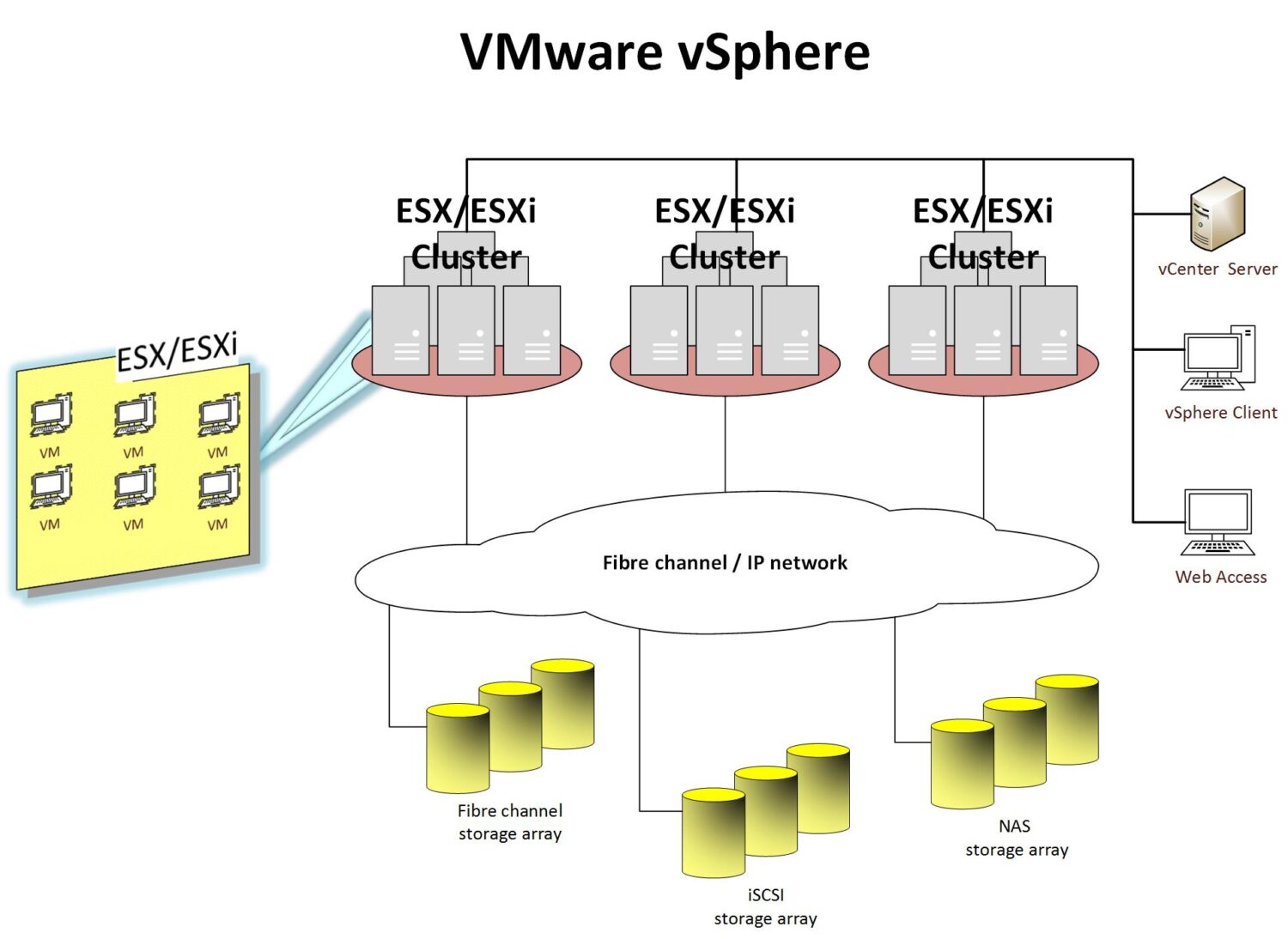
For internal IT teams managing infrastructure across a growing enterprise, VMware remains one of the most trusted names in virtualization. Whether you’re consolidating server sprawl, building a private cloud, or modernizing disaster recovery, VMware’s platform gives mid-size and large organizations the flexibility to do more with less physical hardware. At GCSIT, we work daily with IT departments at companies to design, procure, and implement VMware environments that actually fit their operational reality, not just a vendor’s sales pitch.
Why VMware Still Anchors Enterprise Infrastructure
Virtualization technology transformed how data centers operate by allowing multiple virtual machines to run on a single physical server. This isn’t a new concept anymore, but VMware has continued to refine it with features like vSphere, vSAN, and NSX that address today’s hybrid cloud and security demands. For IT teams balancing legacy applications with modern workloads, VMware provides a consistent management layer that reduces the complexity of running mixed environments.
Enterprises with distributed teams, multiple data centers, or regulatory compliance requirements benefit particularly from VMware’s centralized control plane. Instead of managing hardware in silos, IT administrators get a unified view across compute, storage, and networking resources.
Common VMware Use Cases for Mid-to-Large Enterprises
- Server consolidation: Reducing physical footprint and power/cooling costs by running multiple workloads on fewer physical hosts.
- Disaster recovery: Using VMware’s replication and failover capabilities to meet recovery time objectives without duplicating an entire physical data center.
- Hybrid cloud strategy: Extending on-premises VMware environments into public cloud platforms for burst capacity or gradual cloud migration.
- Security segmentation: Leveraging NSX for micro-segmentation to limit lateral movement in the event of a breach, a growing priority highlighted by guidance from the Cybersecurity and Infrastructure Security Agency.
These use cases rarely exist in isolation. A well-architected VMware deployment typically supports several of them simultaneously, which is why procurement and configuration decisions made early on have long-term consequences for performance and cost.
Pairing VMware with the Right Hardware
VMware performance is only as good as the infrastructure underneath it. This is where GCSIT’s dual expertise in Dell hardware and VMware licensing becomes valuable. Dell PowerEdge servers and storage arrays are frequently validated for VMware workloads, and matching the right compute-to-storage ratio prevents the kind of bottlenecks that surface only after go-live. Instead of treating hardware and software as separate purchasing decisions, our team evaluates them together against your workload profile, growth projections, and budget cycle.
For organizations purchasing through cooperative purchasing vehicles, VMware, Dell hardware, and complementary technologies like Cisco networking, Veeam backup, and Object First immutable storage are available through NASPO ValuePoint contracts. This gives public sector and eligible enterprise buyers a compliant, competitively vetted path to procurement without running a separate RFP for every project.
Licensing Changes and What They Mean for Your Team
VMware’s licensing structure has shifted in recent years, particularly following Broadcom’s acquisition of VMware. Many IT teams are re-evaluating their existing agreements, consolidating point products into bundled subscriptions, or reconsidering renewal timing altogether. These changes affect budget forecasting, so it’s worth reviewing your current entitlements before your next renewal date arrives. GCSIT works directly with IT teams to interpret how these licensing updates apply to their specific environment size and usage patterns, helping avoid surprise costs or compliance gaps.
Backup and Resiliency Alongside VMware
A virtualization platform is only one part of a resilient infrastructure strategy. Pairing VMware with Veeam for backup and replication, and Object First for immutable, ransomware-resistant storage, creates a layered defense against data loss. According to the National Institute of Standards and Technology, maintaining tested, isolated backups is a core recommendation for organizations building cyber resilience. IT teams running VMware should treat backup architecture as a design requirement from day one, not an afterthought bolted on after deployment.
What to Consider Before Your Next VMware Purchase
- Current and projected VM density across your environment
- Storage performance requirements, especially for latency-sensitive applications
- Existing Dell or Cisco hardware compatibility and refresh timelines
- Licensing tier alignment with actual feature usage
- Backup and disaster recovery integration points
- Eligibility for NASPO or other cooperative purchasing contracts
Working through these questions before a purchase, rather than during an urgent renewal or capacity crunch, gives IT teams more leverage and better long-term outcomes.
How GCSIT Supports VMware Deployments
As a value added reseller focused on enterprise IT teams, GCSIT doesn’t just sell VMware licenses. We help internal IT departments plan hardware and software purchases together, navigate NASPO contract options, and design environments that hold up under real production load. Our team’s depth in both VMware and Dell equipment means fewer handoffs, faster answers, and a partner who understands how these technologies work together rather than treating each product as a separate transaction.
If your organization is planning a VMware refresh, expanding your virtualized footprint, or reassessing licensing after recent industry changes, GCSIT is ready to help you build a plan that matches your infrastructure goals and budget realities.